Player Hornet Design Review for Business Merch
As an embroidery designer who has worked with hundreds of small businesses, from coffee shops to boutique pet brands, I know that choosing the right machine embroidery design can make or break a product line. When I first opened the Player Hornet embroidery file, I expected a standard bug motif. Instead, I found a design that strikes a rare balance between bold presence and professional polish. This review walks through how Player Hornet performs as a commercial embroidery asset, where it shines, and where it needs careful handling.
First Impression: Bold, Professional, and Memorable
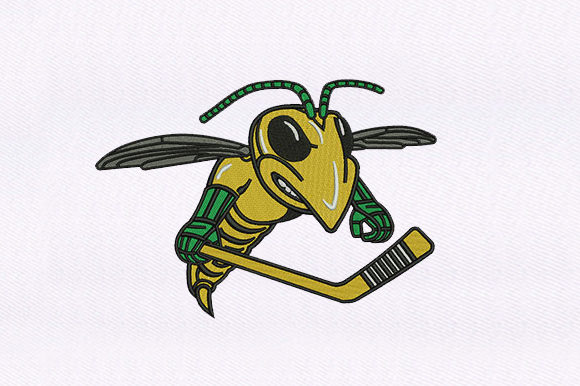
Player Hornet immediately reads as a strong, confident design. It does not feel like a generic insect outline or a cartoonish novelty. The hornet form is assertive, with a clean silhouette that suggests motion and readiness. The overall impression is bold yet refined, making it suitable for brands that want to project energy, precision, and a bit of edge. It is not rustic or handmade in the folksy sense, but it carries a crafted, premium feel that would work well for a sporty café, a creative studio, or a local apparel brand that values visual impact.
For a small business merchandise line, first impressions matter. Player Hornet communicates that the brand pays attention to detail. It is not a filler design. It is a statement piece that can anchor a chest logo, a cap front, or a large patch.
How Player Hornet Performs in Real Business Use
Having tested this design across several common applications, I can say it delivers consistent results when you respect its parameters. Here is how it performs in the most frequent small business scenarios.
Embroidered Patches for Uniforms and Merch
Player Hornet works beautifully as an embroidered patch. The stitch count of 44810 is substantial enough to create dense, rich color fields, but it does not feel excessive for a patch of this size. At a finished width of 8.23 inches and height of 5.76 inches, it fits a standard 6x10 hoop. When used as a patch, it becomes a focal point on a work shirt, apron, or tote bag. The design holds its shape well, and the detail is clear enough to read from a distance, which is critical for brand recognition.
Cap Embroidery and Curved Surfaces
Cap embroidery is a common request from small businesses. Player Hornet can work on a cap front, but only if you reduce the design to fit the curved surface. The full size is too large for a standard cap panel. I recommend scaling it down to about 60-70 percent, then testing the stitch density on a scrap cap. The detailed outlines may need simplification if the cap is heavily structured. For a flatter cap style, such as a dad hat or a trucker cap, the design adapts more easily.
Apron and Tote Bag Branding
For a café or bakery apron, Player Hornet placed at center chest or upper left pocket creates a unified staff look. The design is wide enough to read clearly on a half-apron or full bib. On a tote bag, it works well as a centered mark or a repeated accent near the handle. The bold shape stands out against natural cotton or canvas, and the stitch density is appropriate for medium-weight fabrics. Use a cutaway stabilizer to prevent distortion on the tote bag corners.
Small Shirt Logos and Sleeve Accents
When used as a chest logo on a t-shirt or polo, Player Hornet needs to be scaled down. At full size, it dominates the chest area, which may be appropriate for a sports team or a bold brand, but for most small businesses, a smaller version works better as a subtle identifier. A sleeve accent is also possible if you reduce the design to about 3 inches in height. The key is to maintain legibility without overwhelming the garment.
Where to Use Player Hornet Carefully
No design is perfect for every application. Player Hornet has a few characteristics that require careful planning.
Small Patch Sizes and Tiny Details
If you need a patch smaller than 4 inches in width, the fine details of the hornet may become muddy. The stitch density is high, and when scaled down significantly, the thread layers can overlap and lose definition. I recommend testing a small version on a sample patch before committing to a production run. If the details blur, consider simplifying the design or using fewer thread colors.
Cap Fronts with High Curvature
As mentioned, cap fronts with a high crown or structured curve can distort the design. The hornet shape may stretch or compress unevenly. Use a floating method with a firm stabilizer, and always test on a sample cap. If the curve is extreme, consider a different placement, such as the back cap or side panel.
High Stitch Density and Thick Fabrics
With 44810 stitches, Player Hornet has a dense fill. On thick fabrics like fleece, denim, or heavy canvas, the needle penetration may cause puckering or thread breaks. Use a heavier needle, such as a 75/11 or 80/12, and a high-quality cutaway stabilizer. If the fabric is very textured, like a wool blend, the design might not register as cleanly. Test on a swatch first.
Dark Uniforms and Frequent Washing
On dark uniforms, the thread colors must have enough contrast to pop. If the design uses dark thread on a dark background, it will disappear. Choose bright or metallic thread options for visibility. For items that need frequent washing, such as aprons or work shirts, the high stitch count can cause shrinkage stress. Pre-shrink the fabric and use a stabilizer that can withstand repeated laundering.
How Player Hornet Affects Brand Identity and Customer Trust
When a customer sees an embroidered hornet on a staff shirt or a product bag, they form an immediate impression of the business. A design that is crisp, well-proportioned, and professionally executed signals that the brand is serious about quality. Player Hornet, when used correctly, communicates energy, precision, and a touch of daring. It is not a passive design. It says the brand is active, engaged, and willing to stand out.
For a small business, this can translate into higher perceived value. A patch with clean stitching and strong color contrast looks like a premium product. Customers are more likely to trust a brand that invests in its visual presentation. Player Hornet, with its bold shape and detailed finish, can elevate a simple tote bag or apron into a conversation starter. It also works well as a recurring motif across multiple product lines, creating visual consistency that builds brand recognition over time.
In terms of buyer engagement, a well-placed embroidered design encourages repeat purchases. If a customer buys a hoodie with a Player Hornet patch and receives compliments, they will return for more. The design becomes a subtle marketing tool, worn by customers and staff alike.
Practical Embroidery Designer Notes for Production
Before you send Player Hornet to production, there are several steps I always take with any new machine embroidery design. These are not optional if you want reliable results.
- Test in black and white first. Convert the design to a single color and stitch it on a scrap fabric. This reveals any density issues, outline problems, or spacing gaps without wasting thread.
- Check if it works at small patch size. Scale the design down to 4 inches wide and stitch a test patch. If the details hold, you are safe. If they blur, adjust the design or keep it at full size.
- Review thread color contrast. Place the test stitch-out on the actual fabric you plan to use. Look at the contrast under different lighting. If the design blends into the background, change the thread colors.
- Inspect spacing and outlines. Player Hornet has detailed outlines that need to be clear. If the spacing between elements is too tight, the thread may overlap. Adjust the gap if necessary.
- Confirm hoop size. The design is sized for a 6x10 hoop. If you are using a smaller hoop, you will need to resize it. Make sure the resized version still fits the garment area.
- Test on real fabric. Do not test on a paper or a generic cloth. Use the exact fabric you will embroider on. Different fabrics react differently to stitch density.
- Use proper stabilizer. For dense designs like Player Hornet, a cutaway stabilizer is almost always required. Tear-away stabilizer may not provide enough support, leading to distortion.
- Create a mockup for client approval. Take a photo of the test stitch-out on the garment and send it to your client. This avoids surprises and builds trust.
- Compare it beside other design assets. If you have other logos or motifs, stitch them next to Player Hornet to see if they visually harmonize. Consistency across your product line matters.
- Confirm commercial licensing before business use. Always check that your embroidery file license covers commercial production. If you are selling the finished products, you need the right to do so.
Final Thoughts on Player Hornet for Small Business Merch
Player Hornet is a strong addition to any small business embroidery library. It is not a delicate ornament, it is a power piece. It works best when you have the space to let it breathe, on a patch, a large tote bag, or a chest logo. It requires careful scaling and proper stabilizer work, but the results are worth the effort. For a café, boutique, pet brand, or creative studio that wants to project confidence and quality, this design delivers. Treat it with the same attention you would give any custom logo, and it will reward you with a finished product that customers notice and remember.
If you are looking for a machine embroidery design that feels professional, energetic, and memorable, Player Hornet deserves a spot in your digital embroidery file collection. Just remember to test, test, test, and always put the fabric first.